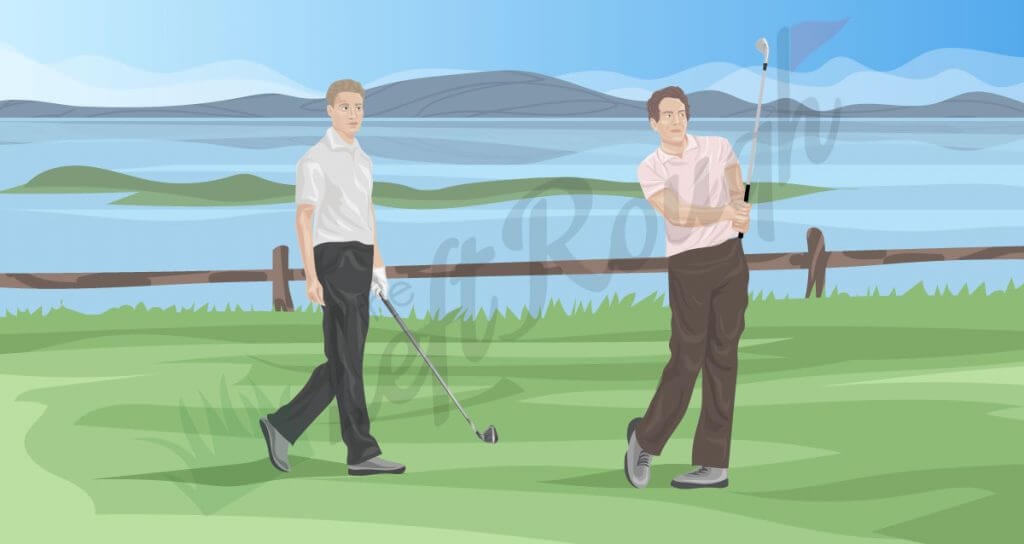
Windy conditions can make the game a lot harder… if you don’t know how to adjust your swing and strategy.
I’m sure you’ve heard the old saying, “When it’s breezy, swing easy.” While the saying gets overused anytime it’s windy on the course, it’s one of the best techniques to play golf in the wind.
In the US, most parts of the country don’t get nearly the wind they do in the motherland of golf. Over the pond, windy and cold conditions are part of the norm of an everyday round, especially on a links style golf course.
But if you’re in the states, chances are you don’t get much wind unless you play close to the ocean or in the Midwest. And if you don’t practice much in the wind, it’s really hard to keep your game together once it gets breezy.
Let’s face it, if you’re like most golfers, you don’t like wind…unless it’s behind you on a par 5 that you can now reach in two. Otherwise, wind can make golf even harder and beat your ball down and/or make it go farther offline.
But your struggles are going to be over once you read this post.
Key Takeaways
- Playing golf in the wind requires the right strategy (both tee box strategy and approach shot strategy) to shoot your best scores.
- You’ll also need to adjust ball position, club selection, and follow through on certain shots to change the golf ball flight.
- Windy conditions also impact putting and chipping and we’ll cover how to navigate the short game in challenging weather too.
- On windy days, you’ll need the right mental game to approach different golf shots and have solid course management skills.
Keep reading to learn more about playing golf in windy conditions.
How to Play Golf in the Wind
The next time you head out and it’s windy or a storm starts heading your way on the course, I want to make sure you are prepared. I want you to love the wind so you can keep your game together while other playing partners crumble.
Here are the best tips and tricks to play golf in the wind.

Learn to Evaluate the Strength of the Wind
If you don’t gauge the wind correctly, none of these tips will matter.
Sometimes you can feel the breeze but see the flag not moving at all. It’s important to throw grass in the air when you approach your shot to gauge the wind speed. But don’t just use that as a wind barometer, you also should look at treetops near you and see how they’re moving.
If you’re playing an open course, you’re going to feel the effects of the wind more. If you’re playing a more heavily wooded course, you might not feel it as much. Make sure you know which direction and how strong the wind is before selecting a club.
Swing Easy
The biggest mistake people make when hitting into a headwind is swinging too hard.
I understand why you’re trying to do it, but it’s not the solution. You’re probably thinking, “The wind is coming at me 10 mph, then I need to swing harder and maybe club up to get there.”
But trying to hit the ball harder actually makes things worse, much worse.
Why?
Because backspin is your mortal enemy when hitting into the wind. When you hit the golf ball harder, the more backspin it generates. When you have more ball speed, the ball will fly higher and thus, be more affected by the wind.

The next time the gusts are blowing in your face, try making a smooth, controlled swing at about 70-80% of your normal speed.
Swinging easier will produce less spin and keep the ball flying lower.
This lower flight will allow your shot to pierce through the wind and not be nearly as affected.
This is why so many American players struggle when playing golf in Europe or windy areas like Texas. Golf in the United States rewards shots that fly high and land soft, while European pros focus on keeping golf balls flying at a lower trajectory.
Let’s now cover how to hit different shots based on wind directions.
Hitting Into the Wind
Hitting into the wind during a breezy round is the most difficult wind for both a left and right-handed golfer. You must hit the ball solidly, otherwise you’ll end up well short of the putting green and might make it hard to get up and down to save par.
Step 1: Club Up
Club selection is huge when you’re playing in the wind, as you need to take enough club.
- If hitting an approach shot, always first check the distance with a GPS or rangefinder.
- If the wind is blowing into your face around 10 mph (with your best guess) you should club up at least one club but likely two to control ball flight.
- When the wind is blowing more than 10 mph, you should club up two or even three clubs. Remember, a harder swing only makes the golf ball launch higher and get impacted by the wind. Don’t be afraid to club up.
Yes, this will feel awkward playing a club you normally hit 10-30 yards farther than the distance to the green. But don’t let your ego get in the way and ruin your game.
So many amateur golfers try to muscle up, swing hard, hit it high and end up way short. Also, once the ball lands on the green, it’ll stop almost immediately when hitting on the green, which is why you need to club.

Step 2: Choke Down
The next step for playing in the wind is choking down one inch on the club.
Choking down will give you a bit more control of the club and help stiffens the shaft. A stiffer shaft will whip less on the downswing and generate less clubhead speed. This will help keep the ball lower and have less spin.
This is also a good tip if your game is struggling and can’t seem to find the face if your life depending on it. Choking up can give you confidence by bringing more control into your game.
Step 3: Change Your Golf Ball Position
The next thing to adjust is your ball position. You’ll want to move the ball back with irons about one inch in your stance.
Another huge mistake that so many amateur golfers make is they put the ball way too far back in attempts to keep the ball low. But if the ball is too far back, you won’t have the right bottoming out point, resulting in some chunky misses.
Do not change ball position with driver, even when playing in the wind! If you watch guys on the PGA Tour, you’ll notice they pretty much hit the same stock shot with driver and never change ball position with the big stick, as it can lead to apop-up shot.
Step 4: Get More Stability
At address, you also want to squat a little more for stability. When the wind is blowing hard, you want to make sure you have a stable base to turn around and complete your swing.
Make a three-quarter swing, and try to stay more on top of the golf ball. A good way to think of it is to feel like your nose is ahead of the ball at impact.
You want your right hip and shoulder to stay high through impact position. This will help you compress the golf ball and keep it piercing through the wind.

Step 5: Finish Low to Hit it Low
The last major thing to do is to finish low. You don’t want a high finish when hitting into the wind as it’ll only make the ball launch higher and thus, be more affected by the wind.
Remember this saying… Finish low and hit it low. Finish high, hit it high.
An abbreviated follow through will ensure your ball isn’t affected nearly as much by the wind. Try to feel like you’re not going past your rib cage on the follow through.
Hitting Downwind
When the wind is behind you, it’s a lot easier than when the fan is blowing straight into you and don’t need to make as many adjustments.
First, you’ll want to club down 1-3 clubs, depending on the strength of the wind. Distance isn’t impacted quite as much from downwind, but spin is affected. The ball flight is lower and will release more once the ball hits the green.
The longer the club, the more roll out is expected. If you have a pitching wedge or short iron, it won’t spin back and generally skip 1-2x before stopping on the green.
Crosswind – Fade Shot or Draw Shot?
Lastly, let’s not forget a left to right or right to left crosswind as well.
There are two ways to play the wind – ride it or fight it. Depending on your skill level and shot preference, you might play a variety of the two.
According to Golf Digest, “The late Payne Stewart advocated riding the wind with the driver to get maximum carry and distance, but to curve the ball into the wind on iron shots and other approaches for better control.”

For example, if Payne was hitting his tee shot in high winds from left-right, he’d play a fade to ride the wind. It helped that he knew his game and trusted his ability to shape shots too.
Others play against the wind and try to fight it.
For example, if it’s a left to right wind, some players advocate hitting a power draw to hit relatively straight. Again, this is going to depend on your own personal skills, shot shape, and where the trouble is on the specific shot.
But most of us aren’t Payne Stewart when it comes to ball striking, especially with strong wind. In general, I think it’s best to play more of a knockdown shot with an extra club then play your normal shot shape. Trying to manipulate the ball flight can lead to a big miss of your intended target and even the dreaded two-way miss.
How to Hit a Driver Low Into The Wind
Most golfers can’t pull off the patented Tiger stinger or even carry long irons. Not to mention utility irons are built to launch the golf ball high in the air which isn’t good when hitting into the wind.
But here’s how you can keep it low off the tee with a driver or fairway wood:
- Tee it low and choke up one inch on the golf club.
- Commit to your intermediate and long range target.
- Don’t try to guide the shot, this will result in big misses and loss of distance.
- Swing smooth without trying to hit it like a long drive contest (unless it’s downwind)
Playing Golf in the Wind – Short Game
While wind primarily affects the longer, higher shots of your game, it can also affect shots around and on the green. For chipping, opt for more bump and runs than high flop shots to avoid the wind.
If you need to hit a pitch shot remember that the same rule applies as full swing. Downwind chips will release more while pitches into the wind will stop faster so make sure to pick the right landing area.
For putting, make sure that you have a wider base over the ball. You want a stable base standing over the golf ball so you can make the putts when you need them most.
FAQs About Windy Conditions on the Golf Course
Do you have more questions about playing golf courses in windy conditions? If so, keep reading through the most frequently asked questions and answers now.
How do I play golf in the wind?
Playing in windy conditions is about navigating your way around the golf course, staying patient, and making changes to your swing/setup. You’ll need to focus on ball position – especially hitting into the wind – and most importantly, properly assessing the wind direction.
This will help you understand where to aim, what club to pick, and what type of shot to play.
Can you play golf in 20 mph wind?
Yes this is pretty common in some areas of the country and will definitely require more club when hitting into the wind. For every 10 mph of wind speed it’s about one club so 20 mph is likely a two club wind (or more).
Can you play golf in 40 mph wind?
If there are 40 mph wind gusts, this is near tornado/hurricane weather and will drastically impact the ball flight. Whether it’s a cross wind, downwind, or into the breeze, this is nearly impossible to play in this type of weather.

How do I hit a knockdown?
Here’s a great video to show you how to flight the ball lower and not let the wind affect your shot nearly as much.
The biggest thing to remember is that it’s about staying in control.
A more stable base will allow you to only take a ¾ backswing and ¾ follow through. And by choking up an inch you’ll have more control and hit it straighter.
Technically not a knockdown shot, Tiger’s Stinger Shot is a great option to have in your bag on a windy day.
Does wind affect putting?
Yes, most people think about playing golf in the wind and how it impacts full shots but putting is just as challenging. Wind can affect a putt, especially short putts and make it go offline.
But the biggest thing to consider when you’re on the putting surface is to build a steady base. Add a little extra knee flex and/or take a slightly wider stance so you don’t lose balance when you’re standing over the putt.
My Experience
Golf wind makes a hard game even more difficult. But to play well in windy conditions you need to first have the right mindset during the round. Tough conditions make the game more challenging so you need to stay patient, understand that low scores aren’t as likely, and grind it out.
On a windy day sticking to a pre-shot routine is one of the most important things you can do. It’ll help you determine when to swing harder, when to take more club, and pick the right targets. Not to mention gameplan the wind speed, direction, and shot shape.

If you can practice when it’s windy that’s even more beneficial… if the wind is into you specifically. When hitting into the wind you can’t “hide” a bad shot and will ultimately learn to become a better ball striker. You’ll also learn how to hit knockdown shots as well.
One important tip, practice only if you’re hitting into the wind and it’s blowing from the right.
Why?
Because when you hit into the wind your misses are magnified.
By practicing in these conditions, you can quickly learn your miss and make a correction. And a right to left wind won’t blow your slices even farther right, which make some bad habits out on the range.
Use a launch monitor if you have one to also see how wind affects ball speed, distance, and launch. The next time conditions aren’t great, get out there and practice! If you never practice in wind, how do you expect to play good in it?
Final Thoughts
If you can master the wind, learn to play in rainy conditions, and how to survive cold weather golf, you will have a huge advantage over your competition.
Lastly, make sure to stay patient out there. It’s easy to get flustered and frustrated when it’s windy and it feels like the ball is going nowhere. But getting mad and swinging harder isn’t going to help anything, it’s only making it worse.
Remember to evaluate the wind, choke up an inch, swing smooth, and finish low. Hopefully, these little tips will help you gain confidence and play great when the conditions get tough.