Isn’t it weird that golf is practiced on the driving range but played on the golf course?
It’s unlike any other sport like basketball, football, and soccer practice where they play. This is not the case with golf.
While you can practice on the golf course, it’s not easy most days as tee sheets are packed. Which is why you should consider playing lessons with a golf instructor. Not only can you practice on the course, you can learn vital tips from a seasoned instructor.
Playing Lessons in Golf
First off, what is a playing lesson?
It’s not like most lessons where you work with a golf coach on the driving range for 45–60 minutes tweaking your swing. While lessons are needed to build your swing, don’t forget golf is not played on the course, not the range.
Too much time on the range and not enough playing golf can lead to so many players struggling to take their game to the course. Which is where playing lessons come in.
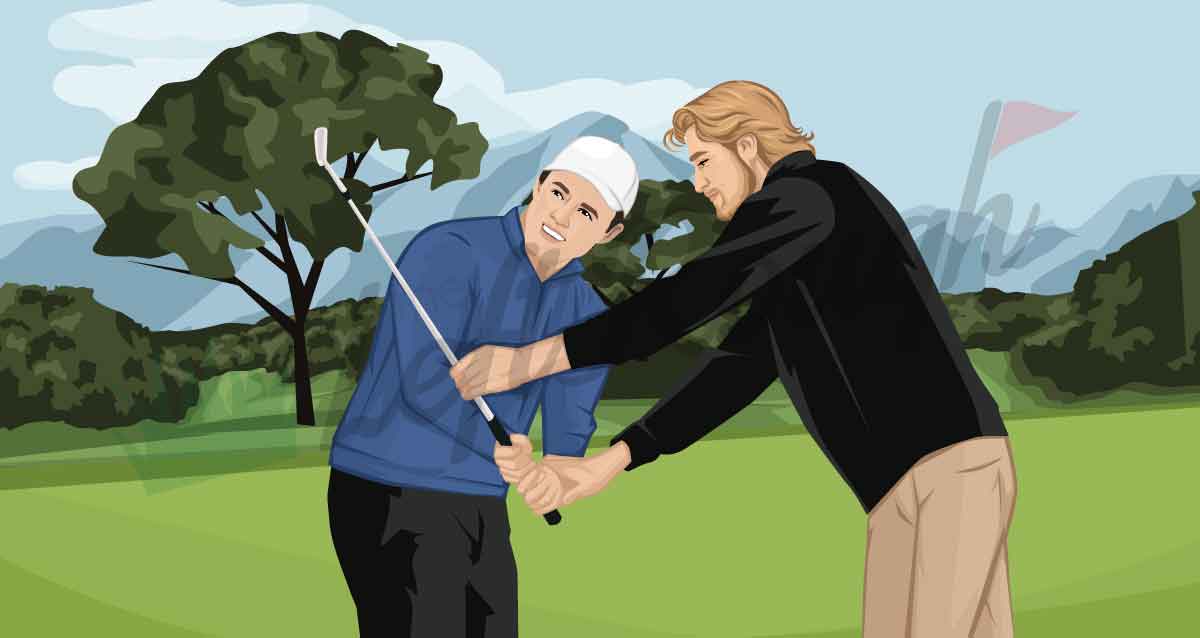
These types of lessons are when you play a few holes (sometimes 9 or 18) with your coach. Depending on the lesson, the instructor might play too, so you can learn from them as well.
Key Takeaways
- There are tons of different types of golf lessons including in-person (driving range or golf course), online, short game, putting, and mental golf coaching.
- Playing lessons might be the best type of lesson but the most underutilized by everyday golfers.
- Some of the benefits of playing lessons include learning course management strategies, proper alignment, setup tweaks, and how to play all types of holes.
- Some of the downsides include finding a coach who offers them, higher costs, and availability.
Keep reading to learn more about playing lessons in golf and how they might unlock more of your game.
Pros of Playing Lessons
There are so many pros to playing lessons and I can’t recommend them enough. Let’s get into how these can dramatically improve your game and scoring.
Real World Application
The first benefit of playing lessons is the real world application.
Unfortunately, most of us hit on the driving range and hope it translates to the golf course. But as you know, this isn’t always the case as the driving range is very different from the golf course.
With playing lessons, you’re on the golf course hitting all types of shots.
Playing lessons let you essentially practice on the course with a coach and address shots that give you trouble. Your coach can watch the basics like tee shots, approach shots, and short game.
Plus, you can drop a few balls and hit trouble shots, too. Maybe you struggle with fairway bunkers but can’t practice them on the range. Or, you struggle hitting from the rough, punch shots, or long bunker shots.
On the course, you can practice any and all types of shots with your coaching watching firsthand.
Immediate Feedback
The second benefit that goes right along with the first is that you can get immediate feedback.
Your coach can help you adjust technique, strategy, and/or alignment in real time. This type of hands-on approach can help reinforce what you’ve learned on the range and build muscle memory.
For example, I always aimed square to the target during driving range lessons and thought I did on the course too. But when I did a playing lesson with a coach, they quickly noticed by hole three I was constantly setting up right (while I thought I was square to my target). Aiming right led to a lot of pulled shots and thanks to a playing lesson, fixed the issue quickly.
Not to mention, you get to work on all parts of your game.
Your instructor will be able to see your tee to green performance first hand and lead to more comprehensive improvement in your game. Plus, they’ll see how you handle pressure, nerves, and evaluate your shot process.
Which leads to arguably the biggest benefit…

Mental Game and Course Management Tips
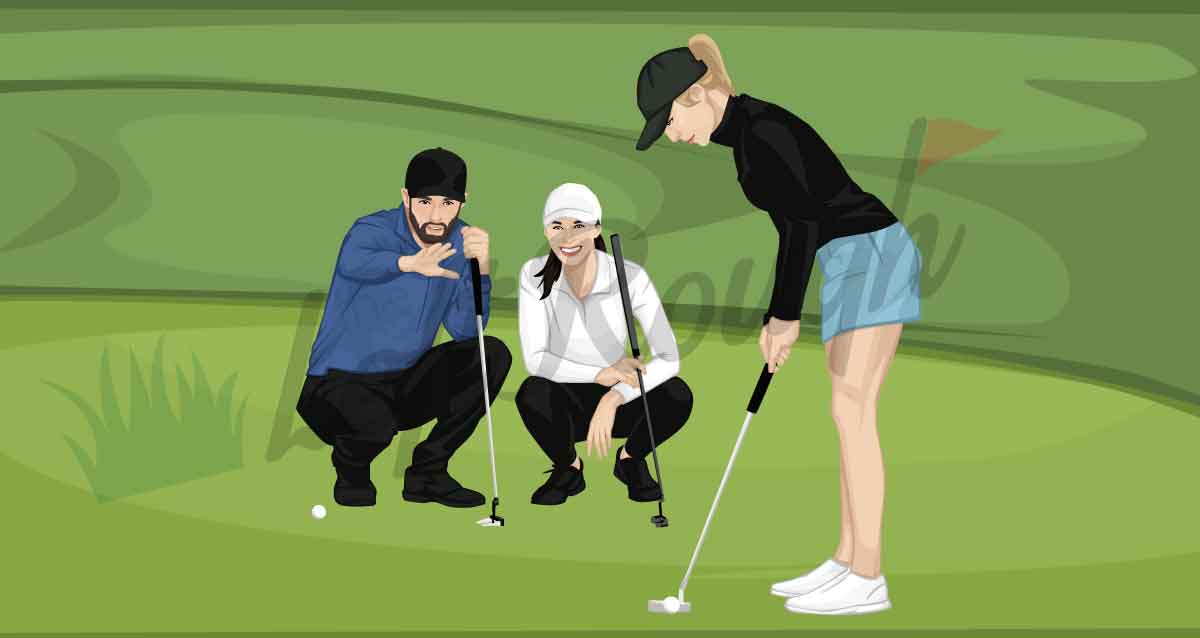
Playing lessons let you work on more than just your swing. When playing a round with a coach, they can see your tee box strategy, approach shot strategy, pre-shot routines, and mental game up close and personal.
These types of lessons can help you build mental resilience, improve focus, and learn strategies to stay composed under pressure. This can have a huge impact on your confidence and learn vital strategies to save shots every single round. Because some lessons just can’t be taught on the driving range!
Cons of Playing Lessons
While there aren’t many downsides to playing with a golf coach, there are a few that I want to note.
More Expensive
The biggest downside to playing lessons is the higher investment price.
Since they generally take 2-4X as long – depending on how many holes you play – there is a much steeper price tag. But I think it’s worth it, as you’ll learn a lot more about golf than you would on the driving range.
Don’t forget, golf is not a sport where the prettiest, most fundamental swing wins. It’s about getting the ball in the hole in the fewest strokes possible. And there’s no doubt that a playing lesson will absolutely help learn vital course management and mental game strategies.
Time Commitment and Scheduling
The time commitment is another drawback to playing lessons, as they take more time. Most playing lessons are nine holes and take about two hours.
However, if your coach has access to the course you might be able to sneak out at less busy times and play more holes. It all depends on the course, the coach’s relationship (country club vs. public course), and more.
Not to mention, you’ll have to make sure your coach offers playing lessons. Some instructors don’t have access to the course if they just rent out a bay at a driving range. And some are so booked they might be able to do a 2-4 hour lesson.
Less Focus on Mechanics
The final downside to on-course playing lessons is that you won’t spend much time on mechanics. Which, for the most part, is a good thing as too many players get bogged down in technicalities (thanks YouTube University and social media).
But if you’re working on swing changes and/or a newer player who needs the basics, these types of lessons might not be as effective.
Playing Lessons Cost vs. Other Types of Lessons
As mentioned above, playing lessons will cost more than a standard 45-60 minute lesson on the driving range. But how much more? It depends on a few factors including the instructor, golf course, and number of holes.
In general, a standard instructor might range from $150 to $400 depending on the number of holes and golf course. While a top tier instructor might charge $250-$500 (or more). Cart fees and or/greens might be separate as well.
However, some coaches do offer half day or full day rates too.
With these packages, golfers can spend time on the range, short game area, and a playing lesson on the golf course. Always reach out to your coach (or potential coach) to confirm what’s included before booking a half or full day rate and on course instruction.
Other Types of Golf Lessons
While driving range lessons are quite common and a lot of players are familiar with playing lessons, there are other types of lessons too.
The first type of lesson to consider is a short game lesson.
This might be with your current coach or someone who just works on the short game side of things. These lessons typically are priced the same as a normal driving range lesson and allow you to work on chips, pitches, and greenside bunker shots.
Another type of lesson is online lessons, where you submit a swing to a coach anywhere in the world. These are very easy to do and becoming quite popular with golfers. Some of these lessons are even done live with FaceTime or Zoom so you can get interactive feedback like you were in person.

The final type of lesson is working with a sports psychologist or mental golf coach. These lessons deal more with the mental side of the game, overcoming specific issues (like yips), playing well under pressure, and tournament preparation.
All of these types of lessons can help, it’s all about finding the right instructor and working on your weaknesses. Don’t be afraid to get a lesson, as it can have a lifelong impact on your game and allow you to speed up the learning process.
My Experience
Over my 20+ years of playing golf, I’ve had all sorts of lessons. Some were fantastic, others I instantly forgot about because I didn’t have a good relationship with the coach.
I think driving range and virtual swing lessons are good for most golfers who want to improve form and proper technique. But as you get more consistent with your swing, short game lessons, playing lessons, and mental lessons are more important.
As I said earlier, golf is about getting the ball in the hole in the fewest strokes… not developing a “perfect” swing. When you learn how to master course management and have a solid short game plus mental game, scoring lower happens faster.
Start by analyzing your stats to see which type of lesson will work best for you. Then, do your research to find a coach you can trust and want to work with to improve your game.
Final Thoughts
Playing lessons are a fantastic way to learn how to score lower, a lot faster than more time on the range.
They’re very fun, refreshing, and can help learn vital skills that will help you manage your game. If you haven’t had a playing lesson yet, find a coach near you that offers them and give it a shot.
Also, don’t forget to learn more about playing lessons for junior golfers too.