

Do you have a busy schedule but still want to lower your handicap and play more consistent golf?
If so, you’ll love this guide today as I’ll provide seven tips to help you practice and improve, even if you’re busy. As you know, golf is a great sport, but it takes a lot of time.
Think about it…
Most golf courses take at least four hours to complete, not to mention a possible commute (there and back) plus a pre-round warm up. And maybe some food after the round. It’s easy to spend the entire day at the course and the good news is that you can do a lot at home to improve.
Golf With a Busy Schedule
Before getting started, you need to first dispel two common misconceptions about golf.
- You do not need to practice every day to improve your game. Sure, consistent practice helps, but your swing motion won’t break down if you take time off.
- You do not need to practice for hours when you do have time. Stop judging your practice sessions by how long they are and instead, judge them for their effectiveness. You can have a great practice session in 30 minutes with a small bucket of balls.
Key Takeaways
- Golf is a fun sport but does take a lot of time if you play 18 holes several times a week.
- But if you want to improve you can practice at home with an indoor putting mat, chipping buckets, or a net outdoors.
- If you’re really committed to improving, you can also build an indoor golf simulator.
Keep reading to learn seven easy ways to sneak in more golf and practice better with a busy schedule.

1. Use an Indoor Putting Mat
It’s hard to understate the importance of putting in golf. Improving your putting is vital to achieving your golf goals.
The good news is that you don’t need to leave home to improve your short game. Sure, it’s helpful if you can make it to the course, but if you have a busy schedule, it’s not always easy to do. Or, the driving range might catch your eye, as a lot of golfers find it more fun to bomb drivers instead of spending time on short putts.
This is where an indoor putting mat comes in handy. With an indoor mat, you can:
- Work on your short putts.
- Practice your putting tempo.
- Dial in your setup on short putts.
- Develop a consistent pre-shot putting routine.
- Use it with a putting mirror to develop good fundamentals.
All without leaving your house and can even do it while watching golf on TV (talk about multitasking). Even 20 minutes a few times a week can make a giant difference for your on course performance.
Click here to read our guide to the best indoor putting greens.
2. Create an Outdoor Practice Area
The second strategy to golf with a busy schedule is to utilize your backyard. Or, if you don’t have a yard, you can get some practice in at a nearby community park.
Here are some strategies to help you save commute times and busy driving ranges.
Use BirdieBall
BirdieBall is one of the best gadgets to help you practice, even if you’re strapped for time and don’t have a backyard. Here’s how they described the PGA-award winning device on their website.
“The BirdieBall has a limited flight distance of 40 yards, but it feels and flies just like a real golf ball. Like a golf ball, the BirdieBall flies with reverse spin around its horizontal axis. Allowing you to draw and fade, you’ll know you’ve made good contact by the gratifying sound and feel produced after a pure strike.”

That’s right, it only travels 40 yards!
Which is great because you can hit drives even if you don’t have a massive park. Use it in a parking lot or open field to work on your game without going to the golf course.
Use Chipping Buckets
Another good way to practice if you’re strapped for time is a set of chipping buckets. Buy a small hitting mat and some buckets to dial in your short game. Set them up at different distances (30, 40, 50, etc.) at a park to improve your wedge game.
I’ve been doing this recently as I have a park one minute from my house and it’s a perfect way to spend 30–45 minutes. I encourage you to develop a clock system so you have different distances for your wedges.
This is a great way to build out your distance charts.
Build an Outdoor Putting Green
Finally, don’t forget about the option of building an outdoor putting green.
If you can’t get to the course as often as you’d like, bring the course to you with a backyard green. They’re also great for entertaining with friends and family.

While they’re pretty expensive if you hire someone to do it, this is something you can build (if you’re on the handier side). For bonus points, you can also build a small bunker to work on your sand game too.
Click here to read our full guide to building an outdoor putting green.
Start Speed Training
Another way to improve your game without getting to the course is overspeed training (aka speed training). This is where you use a weighted club to train your mind and body to swing the club faster.
The three most common speed trainers are:
All you need to do is buy one of the trainers and follow their protocol – which is roughly 15 to 20 minutes, three times per week. In a few months (or sooner) you’ll typically see an increase in swing speed, which correlates to more distance off the tee. And, ultimately, makes the game a lot easier.
Also, don’t forget to add in some golf workouts too. Some extra stretching won’t hurt your flexibility either, so you can avoid golf injuries.
3. Practice Strategically
If you do have some time to get to the course or simulator, make sure it’s planned out. Because if you’re strapped for time and have a chance to go practice, there’s nothing worse than feeling you killed time.

Instead, make sure you:
- Have a dedicated plan. What are you working for 30 or 60 minutes? Get specific!
- Track your stats so you can study your weaknesses. When you have objective data about your game, it makes it much easier to know where you should spend your practice time.
- Practice with headphones. I like to use Apple AirPods if I only have a quick practice time to listen to one song on repeat. Or, listen to binaural beats to stay more focused and keep my mind engaged.
4. Build an Indoor Golf Simulator
One of the best ways to combat a busy schedule is to play and practice your game at home. This way you avoid busy driving ranges where you might have to wait and traffic. Not to mention, it’s incredibly convenient.
This is where a golf simulator comes in handy.
The good news is that simulators do not cost $10,000 or more like they used too. While you can build one that is expensive (and a lot more), you can also build one for under $1,000 pretty easily.
Here are the steps to learn more and some of our most helpful articles to help navigate through this process.
- Find a simulator space. Do you want to build your simulator in your garage, backyard, under a patio or carport, or spare bedroom?
- Get the right launch monitor. Your launch monitor will power your simulator and some work outdoors too.
- Find the right software and projector. Once you have the space and a launch monitor, you will need software to have it all sync up and provide the images.
- Carve out time in your calendar. After you’ve built an epic simulator, don’t forget to use it. I say this from experience – it’s easy to have something at home and forget to use it (like gym equipment or a golf training aid).
Learn more about a DIY simulator here.
5. Play an Executive Golf Course
Alright, now that I’ve given you a lot of options to practice from home or a nearby park, let’s get into some tips to help actually playing golf. Because as necessary as practice is, you still want to play golf.
One of the best options to save time (and money) is to play an executive golf course instead of a championship golf course. What’s the difference?
Mainly the length.
Executive courses are shorter – typically only par 3s and some short par 4s – which improves the pace of play. These courses were originally designed for executives to sneak off the course during business hours.
Learn more about executive golf courses here.
6. Book Tee Times Accordingly
Even if you build your own golf simulator, let’s face it, indoor golf can’t beat real golf on the course. Use these tips to play golf strategically and more efficiently.
Avoid Holiday Rounds
Three-day weekends are great, but they’re usually the busiest days at the course. Not to mention more expensive, too.
Avoid playing on long holiday weekends unless you can get one of the first tee times of the day.
Play Weekdays and Twilight Rounds
While holidays are busy, so are weekends. If you can sneak out of work earlier, weekdays and twilight rounds are a great solution. The course is usually a lot less busy, which means you can get around a lot sooner.

7. Consider Joining a Country Club
The final tip is to consider joining a country club as it can help with pace of play. Public golf courses are packed and a private course might have fewer golfers, which means a faster pace of play. Not to mention, when you join a country club, it’s much easier to play 9 holes or practice than play a few empty holes.
This is nearly impossible to do at a local golf course. Not to mention, when you join a private club you can:
- Practice on the golf course. Which is ideal if you struggle with certain shots such as fairway bunkers, punch shots under trees, or other shots you can’t try out at the driving range.
- Meet new people and join a men’s or women’s league. This is a great way to meet a group of like-minded golfers and find a consistent group to play with.
- Get your family involved with the game. Joining a country club is also a fun way to get your wife and kids involved in junior golf programs.
If you’re a golf junkie and can’t get enough of this great game, you should definitely consider joining a private country club.
FAQs About Golf Practice
Do you have more questions about trying to squeeze in golf practice sessions?
How do you fit a golf practice in your schedule?
Be strategic with your calendar and plan practice sessions ahead of time. Make it a priority to stick to your commitments so you can improve your game.
Will I get better at golf if I play every day?
Maybe, but not necessarily. As mentioned above, you don’t need hours every day to improve.
How many hours a day should you practice golf?
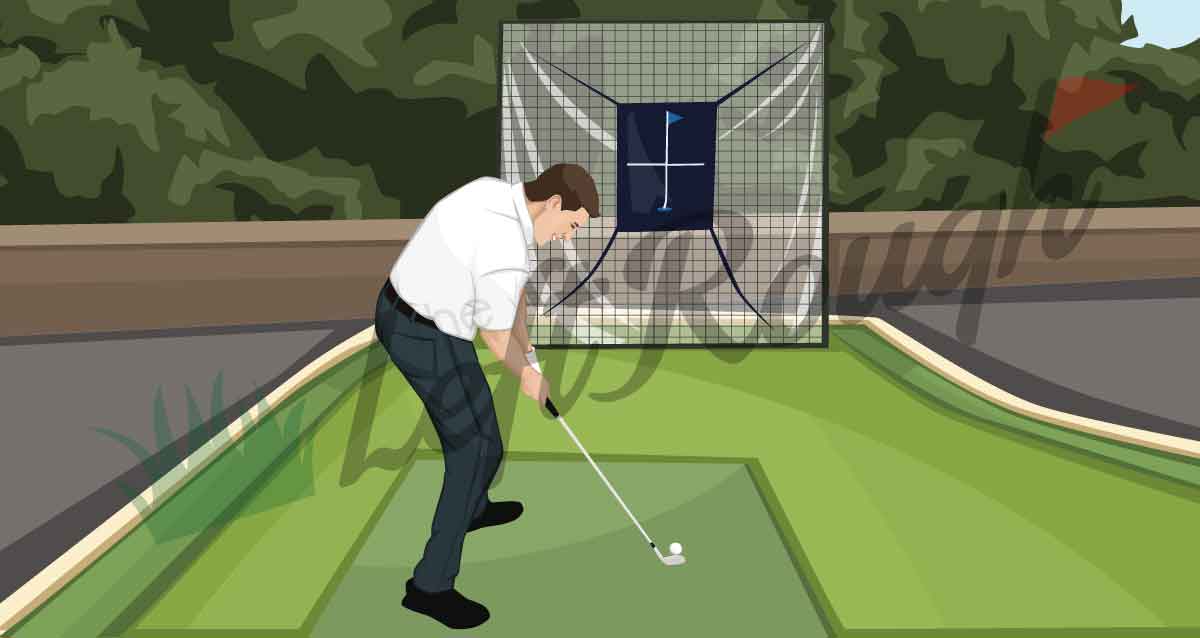
Even 10–15 minutes doing mirror drills, hitting short putts on an indoor mat, or speed training can help. Don’t think you need hours to improve.
My Experience
Golf does require consistency to hit your goals, but it doesn’t require you to spend your whole life on the course. Make sure to plan ahead, work on your weaknesses, and find time. If it’s important enough, you will make the time for this great game.
Final Thoughts
As you can tell, there are tons of ways to play and practice, even if you have a busy schedule. Don’t get me wrong, it will usually take some planning ahead, but it can be done.
What’s your best tip for practicing on a busy schedule?


